
| PROS | CONS |
|---|---|
| + Additional foam + Price + Good weight | – Dense upper |
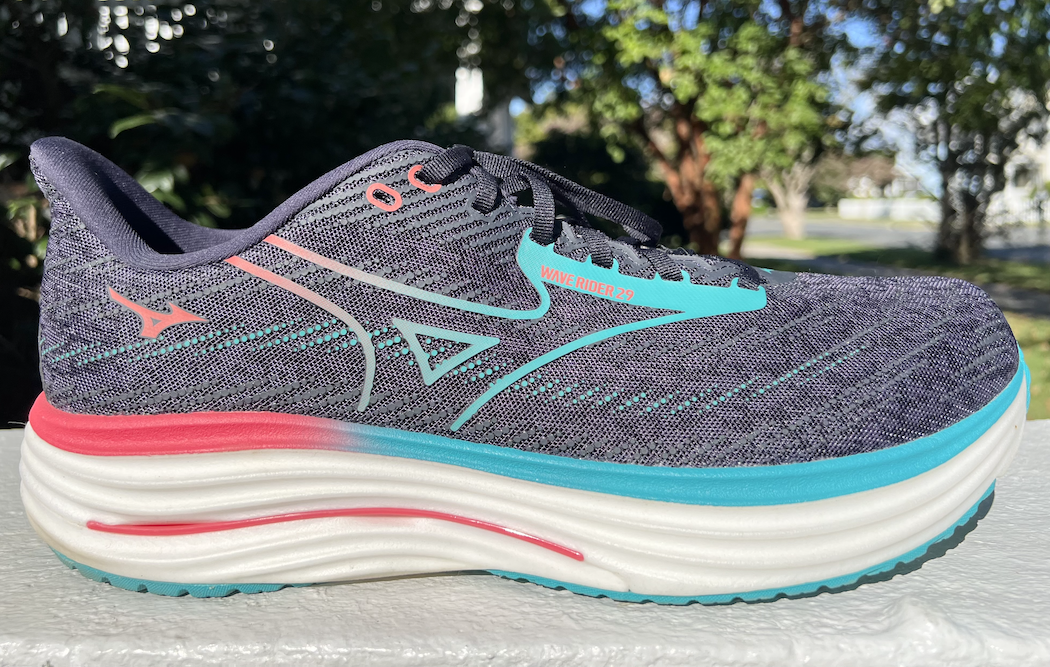
The Mizuno Wave Rider has more longevity than just about any other running shoe not named the Nike Pegasus. This year marks the 29th edition of the neutral daily trainer (Pegasus is on #42), a feat that ought to be applauded given the constant turnover in running shoes. It seems at least one notable shoe is either discontinued or rebranded each year, coupled with the abundance of new models flooding the market. Not to mention the pairs that change everything but the name. After nearly three decades, has Mizuno mastered its best-selling pair, first introduced in 1998? Find out, in this Mizuno Wave Rider 29 review.
Mizuno Wave Rider 29 Review
| STACK HEIGHT | WEIGHT | PRICE |
|---|---|---|
| 39/29 mm (10 mm drop) | M9: 9.3 oz/258 g W8: 8 oz/226 g | $150 |
Midsole
Let’s not bury the lede: the Wave Rider 29 has a plate! Before you cream your jeans, it’s not a real plate. The MIZUNO WAVE plate is made of PEBAX RNEW, a “plant-based high-performance TPU.” Told you it wasn’t the real deal. Don’t expect this plate to provide the same propulsive experience of carbon fiber or nylon plates. It doesn’t. And that’s not its purpose. The plate helps provide a more stable platform and extra cushioning. Yawn. Screw it—Mizuno might as well remove the plate.
Stop me if you’ve heard this before: The latest update adds even more foam to the stack height. Because let’s be honest: if a shoe doesn’t increase its foam, can it even be considered new? No. It can’t.
The nitrogen-infused EVA foam, ENERZY NXT, increases 1.5 mm in the heel and 3.5 mm in the forefoot, measuring at an impressive 39/29 mm stack height.
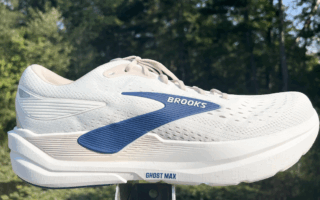
A welcome update, Mizuno finally changed the Wave Rider from a 12 to 10 millimeter drop. It’s interesting timing, very interesting timing, given Brooks also modified the Ghost’s 12 mm drop to 10 this very year. Conspiracy theory: this cannot have been a coincidence; I don’t care what anyone says. And trust me, people are talking. They’re talking up a storm.
Brooks and Mizuno must have coordinated on this. I sure wish shoe brands would partner on more exciting things. Alas, it seems shedding 2 millimeters from a drop is the best we can get. How’s that for innovation?
Thankfully, the 12 mm drop is becoming extinct from the running planet. It’s too dramatic of a heel-toe drop, one that doesn’t work well for midfoot and forefoot strikers, and even for myself, as a heel-striker.
Ride
Right off the bat foot, the ride of the Wave Rider 29 reminds me of the Ghost 17. Just slightly less cushioned at 36.5/26.5 mm, the Ghost shares a 10 mm drop and a nitrogen-infused EVA foam (DNA LOFT v3). Both provide very stable rides that work for a variety of neutral runners.
How do they differ? The Wave Rider feels more responsive and softer than the Ghost 17. It’s also considerably lighter than the Ghost—0.8 oz, to be exact. If I had to choose between the two, I’d go with the Wave Rider.
Staying in the Mizuno family, the max cushioned Wave Sky 9 (44/38 mm) feels softer underfoot and more responsive than the Wave Rider. The Wave Sky 9 shares the ENERZY NXT foam but also has a top foam layer of U4icX — no, that’s not the name of one of Elon Musk’s 14 children. Unsurprisingly, the $180 Wave Sky 9 provides a more comfortable and fun running experience, from top to bottom. This time, the Wave Rider loses.
ENERZY NXT has decent energy return, but, again, similar to the Ghost, don’t expect any kind of bounce on the run. The Wave Rider works best as a daily trainer. Although it’s got a great weight and is very stable, it’s not a long run shoe for me. I prefer an even softer, more exciting ride.
Mizuno describes the Wave Rider 29 as moderately cushioned, but its 39/29 mm stack begs to differ, if only so it can be granted entry into the “Max Cushion Club.” I will say, I was shocked to learn the heel measures at 39 mm; it doesn’t feel that tall.
Upper
Similar to the Wave Sky 9, the jacquard mesh upper is not very breathable. In both pairs, it’s clear Mizuno didn’t prioritize ventilation—a curious decision given we’re in the year of our lord: 2025. Having a dense upper is so 2008, and Mizuno is so “2000 and late.” Boom boom pow. (Whatever happened to the Black Eyed Susans, anyway?)
On the bright side, the upper is comfy and the heel collar has decent padding. The gusseted tongue is light, stretchy, and the perfect length to keep my feet in place. However, I have noticed the Wave Rider runs a tad long, so I need to tie my laces extra tight to ensure a secure lockdown. It probably doesn’t help that I never learned to tie my laces the right way. Don’t worry: you shouldn’t need to size down.
Outsole
The shoe keeps the X10 outsole from the previous version with a redesigned rubber pattern. X10 is comprised of carbon rubber, designed for longer wear. I had no issue with traction in wet conditions, and, based off my test runs and the amount of rubber, I expect great durability from the pair.
Weight
In other awesome news, the Wave Rider 29 cut nearly a half ounce (0.4 oz) from the 28, coming in at a surprising 9.3 ounces for a men’s size 9 and 8 ounces for a women’s size 8. Every shoe company ought to take note: Mizuno added cushioning yet was able to decrease the weight. This is a stellar weight for a plated daily trainer measuring at 39 millimeters in the heel. I’m surprised Mizuno can get it that light with its dense upper and the ample amount of outsole rubber.
Aesthetics
My “ODYSSEY GREY-CAPRI BREEZE” colorway is the most “fun” of the five available options, although you can’t go wrong with any of them—unlike the milquetoast Wave Sky 9 options. The 29th edition carries a slightly more contemporary design than the 28 for reasons I can’t quite put my finger on. Expert analysis provided by The Size 15 Runner.
Price
Ok, now I definitely know Mizuno and Brooks are in cahoots: Mizuno increased the price $10 from the previous edition, now sitting at a (still) reasonable $150, the same price as…you guessed it: the Ghost 17—which was…you guessed it: $140 in the previous edition. Forget conspiracy theory, this is cold hard collusion. There’s too much evidence to ignore.
Conclusion
The addition of more midsole foam, decreased weight, and a slight—but notable—reduction in drop give the long-running Wave Rider a nice refresh that feels right at home in 2026. It won’t weigh you or your wallet down; just don’t expect it to do all the heavy lifting.
The Wave Rider 29 is available on Mizuno’s website…or anywhere you buy shoes.
- D.A.R.E. Out: Schools Use Runner’s High as Drug-Free Strategy
- Dos Equis Introduces the “Most Interesting Runner in the World”
- Healed Injury Refuses to Quit Being Mitch’s Excuse Not to Run
- After F1: Drive to Survive Success, Netflix Orders 6 Seasons of “Run to Have Fun”
- Nike and 41-Year-Old Kipchoge Aim to Shave Entire Hour off Marathon Record
- Amid Batshit Prices, Runners Resort to Renting Shoes
- Mattel Bows to Trump’s Demands With Homoerotic Runner Ken Doll
- Report: “The Yips” Afflicting Runners at Alarming Rate
- Ted Dreads Honeymoon Abroad — “Where the Hell Will I Run?”
- World Athletics Adopts ‘Choose Your Own Adventure’ Course for Road Running Championships
- CEO Admits New Running Shoe “Ass”: “We’ve Made it Worse”
- Goldendoodle “Winston” Burned Out from Marathon Training
- Researchers Determine Heel Pull Tabs Serve No Purpose
- Company Confuses ‘Biannual,’ Locks Itself Into Double the Shoe Updates
- Report: ‘Pain Cave’ More Closely Resembles ‘Pain Cavern’
- Gel Brand Drops Marathoner After Pregnancy Deemed Incompatible With Peak Performance
- Guy Unsure When, Why, or How He Became a Runner
- Cyclists Demand Inclusion in Nike Ad That Acknowledges Everyone Except Them
- Tracksmith and rabbit Unveil Shared Tortoise Logo to Differentiate Brands
- Method Runner Refuses to Break Character When Not Running
- LA Marathon Scraps Finisher Medals for Starter Participation Trophies
- Road Runner Transitions to Trail Runner—Not Everyone Is an Ally
- Running Influencer Calls for Inclusive Sport That Excludes Pros
- NYRR Replaces Road Races with Trail Races; Unveils 19+1 Program
- UCAN Sponsors Male Runner After Demonstrating “Elite Virility” in Impregnating Wife
- Company Scraps Carbon Neutral Commitment; Will Emit More CO2
- Report: Straight White Male Runner Not Center of Universe
- Teresa Never Experiences Runner’s High with Boyfriend, Continues Faking It
- JD Vance Unveils “F*ck a Couch to 5K” Plan
- Derek Calls Night Runs ‘Relaxing,’ Mystified by Concept of Women’s Safety
- New Balance Unveils the ‘OUT-AND-BACK,’ Finally Offering Alternative to the ‘TRACK’
- Psychopath Runs In Total Silence, Waves Like It’s Normal
- Gregory Desperately Trying to Outrun “The Runs” Mid-Run
- ESPN Cancels Ill-Advised “First Take” Running Spinoff Show
- Game Over: Kyle Convinced Bullpen Entrance Song Gives Him Edge in Race
- Boston Marathon Bans Porta-Potties, Requires Runners to Carry Own Waste
- “It’s a Wonderful Run” Shows It’s a Miserable Life Without Running
- Amateur Runner Self-Imposes 5-Year Ban After Admitting to Creatine Use
- Runner’s World Confirms Shoe Stack Height the New “Penis Size”
- Tracksmith Sells Singlet for “Losers” Failing to Qualify for Boston
- Runner Does Same Route in Same Shoes—Refuses to Do Missionary
- FanDuel Lets You Bet on Amateur Runners—Even Your Daughter
- Kevin Refuses to Go Down on Wife During Marathon Training
- Study Finds Energy Gels Provide No Nutritional Value, Entirely Placebo
- Brock Furious He Must Finish Current Step Before Taking Next Step
- Boston Marathon Renames Heartbreak Hill to “One Big Beautiful Hill”
- Archaeologists Unearth Prehistoric Running Shoe Circa 2019
- Runner Finally Comfortable Enough to Drop from 10- to 9-Inch Inseam
- Luis Swears He’ll Run Tomorrow—Same Lie as Yesterday
- Boston Qualifiers Alarmed by Growing Trend of Charity Runners “Helping Other People”
- Courageous Runner Tempts Fate By Wearing Two Left (L) Socks
- Reviews Are In: Kids Running Movie Can’t Go the Distance
- Researchers Determine Men’s Marathon Record More Impressive Than Cure for Cancer
- Running Warehouse Shutters Operations Following Departure of Its Heart and Soul
- Creep “Flirts” with Crush Solely Using Strava
- Boston’s Top American Talbi Reveals He Wore Glasses to Avoid Detection as Contender
- Runner Clearly Only Stopped In Café To Use Restroom, Pretends Otherwise
- Diehard Vegan Unknowingly Commits Insect Genocide on Every Run
- 4/20 Casts Cloud Over Boston Marathon; Spectators Oddly Chill, Runners Compromised
- Running Influencer Shills Self-Confidence Not to Follow Him
Mizuno graciously provided this shoe to me for wear testing. I was not compensated for this Mizuno Wave Rider 29 Review and they didn’t get an opportunity to see this Mizuno Wave Rider 29 review before I published.
This post includes affiliate links, which means I may earn a small commission if you purchase (at no extra cost to you.)